
Share this post
Building a Stronger Community Data Network
What began with six Chicago organizations has grown into a national network focused on making AAPI communities more visible in data and helping organizations use what they know to make better decisions.
Civic Engagement & Advocacy
Written by David Li
ChangeInSight grew in both size and scope this year. We now have 42 active partners, including nine new organizations, and our broader network reaches 91 community-based organizations working across social services, health, advocacy, research, and coalition-building.
What began with six Chicago organizations has grown into a national network focused on making AAPI communities more visible in data and helping organizations use what they know to make better decisions.
Here are some of the highlights from the past year.
Growing the ChangeInSight Network
ChangeInSight partners now span 10 states and Washington, D.C., with strong concentrations in California, New York, and Illinois. Together, current partners serve more than half a million people each year, while the broader ChangeInSight network reaches an estimated 600,000+ people annually.
The organizations themselves vary widely in size, geography, and focus. That diversity is important: ChangeInSight is built around the knowledge community organizations already hold about the people they serve.
Virtual Data Equity Summit

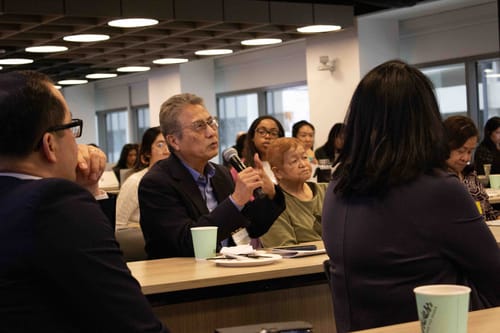
In April, ChangeInSight hosted its first all-day virtual Data Equity Summit, bringing together more than 70 attendees from nearly 50 organizations.
Government officials, researchers, nonprofit leaders, and civic engagement experts joined conversations about how data shapes public policy, funding, and services for immigrant and underrepresented communities.
Sessions explored data disaggregation, community-generated data, changing access to public datasets, and what organizations can do when communities are missing or poorly represented in traditional sources.


The summit concluded with reflections on ChangeInSight’s fourth year and a look ahead to Year 5.
Continuing the Conversation
Following the summit, ChangeInSight launched Data Equity Talks, a series designed to go deeper into issues affecting community visibility and decision-making.

In May, Lloyd Feng, Senior Data Policy Coordinator at longtime ChangeInSight partner the Coalition for Asian American Children + Families, joined us to discuss New York City’s Invisible No More campaign.
The series creates space for community leaders and experts to share how data can support advocacy, public health, policy, and other real-world decisions while keeping community knowledge and lived experience at the center.
From Community Data to Policy
This year also showed how community data can move beyond a report or dashboard.
On May 20, Chicago City Council passed new data disaggregation legislation introduced by Alderwoman Nicole Lee in partnership with CASL. Examples and lessons from ChangeInSight helped strengthen the case for why more detailed community data matters.
Around the same time, ChangeInSight partners shared directly with CASL staff about the Chin, Cambodian, and Pacific Islander communities they serve.


Both efforts reinforced the same lesson: numbers are stronger when they come with context from organizations and people who know their communities.
A More Complete Picture of Need
As ChangeInSight entered its fifth year, we expanded our approach to look beyond individual survey responses.
Partners now contribute information at three levels: organizational needs, overall service-population demographics, and individual or household needs.
We also introduced the Organizational Needs Survey, informally called our “pulse check,” to better understand what organizations themselves are facing.
Of the organizations that responded, funding was the most common challenge, followed by staffing, increased service demand, and the policy environment. Organizations also identified a need for stronger operational support, help communicating impact, grant and funding support, and better data-management practices.
The takeaway was clear: having good data is only one part of the equation. Organizations also need the staff, systems, resources, and support to put that information to use.
Strengthening the Data Behind the Work
ChangeInSight has now collected responses from more than 20,000 people over five years.
Our methodology has continued to evolve alongside the network. By looking at who organizations serve before interpreting individual responses, ChangeInSight can better understand whether the data reflects the broader community and where important gaps remain.

In June, ChangeInSight shared this approach at the Illinois Department of Children and Family Services’ 12th Annual Asian American Family Institute Day, focusing on the importance of understanding data in context and what that means for public agencies making decisions about communities.
Looking Ahead
As we prepare for our next Data Equity Summit in October, we are turning our attention to some of the questions shaping the future of this work.
- How do organizations protect community information while still putting it to use?
- What does accountability look like as new technologies make it easier to collect and analyze data?
- As AI becomes a bigger part of the conversation, how do we make sure trust remains at the center?
ChangeInSight has grown beyond collecting data. We are building a community-led network that helps organizations understand who they serve, communicate what their communities need, and turn that knowledge into action.